



Early Life and Background
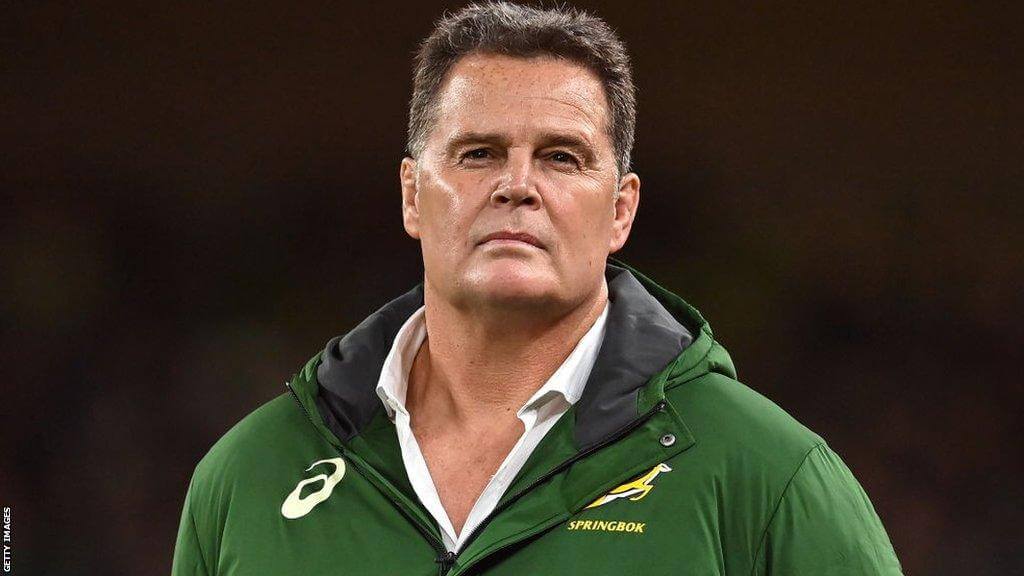
Johan “Rassie” Erasmus was born on 5 November 1972 and grew up in Despatch, a small town in South Africa’s Eastern Cape, not far from Port Elizabeth. His upbringing was not without challenges, including struggles within his family, but rugby soon became a defining part of his life. He later attended the University of the Free State, where his rugby ambitions continued to develop and eventually launched a professional career that would take him to the highest level of the sport.
Playing Career: From Provincial Star to Springbok
Erasmus began his elite rugby journey with Free State during the 1994 Currie Cup. At a time when rugby union was transitioning into professionalism, he quickly established himself as a hardworking and intelligent loose forward. His performances earned him a place in Free State’s squad for the 1997 Super 12 season, which further elevated his reputation.
His Springbok debut came on 5 July 1997 in Johannesburg against the touring British & Irish Lions. South Africa won that match 35–16, and Erasmus soon proved his value at international level. In just his second Test, against Australia in Pretoria later that year, he scored a try as South Africa won convincingly. He was part of the Springbok side during their impressive run of victories between 1997 and 1998, a period that included South Africa’s triumph in the 1998 Tri Nations.
At provincial and franchise level, Erasmus joined the Cats for the 1998 Super 12 season and became an influential figure within the team. He captained the side between 1999 and 2000, guiding them to the semi-finals of the 2000 competition. His leadership credentials were also recognised at national level, and he captained South Africa in a Test against Australia during the 1999 Tri Nations.
Erasmus was included in South Africa’s squad for the 1999 Rugby World Cup and featured in almost every match of the tournament. The Springboks reached the semi-final, where they lost to eventual champions Australia after extra time, before defeating New Zealand in the third-place play-off.
He continued playing at top level until the early 2000s, returning to Free State after leaving the Cats and later joining the Stormers for the 2003 Super 12 season. Persistent injuries and a physically demanding career eventually led to his retirement in 2003. By that point he had earned 36 caps for South Africa and built a reputation as a tough, tactically aware forward.
Coaching Beginnings in South Africa
Erasmus moved almost immediately into coaching after retirement. In 2004 he took charge of the Free State Cheetahs in the Vodacom Cup and guided the side to the semi-finals. His real breakthrough came in 2005 when he led Free State to their first Currie Cup title since 1976, a remarkable achievement that established him as one of the most promising young coaches in the country.
The following year he oversaw the Cheetahs’ debut Super 14 campaign while also helping the province retain the Currie Cup in 2006, sharing the title with the Blue Bulls after an epic drawn final. His growing reputation led to involvement with the Springboks as a technical adviser ahead of the 2007 Rugby World Cup, although he soon returned to domestic rugby when he became director of rugby at Western Province.
Erasmus also took charge of the Stormers for the 2008 Super 14 season and quickly improved the team’s competitiveness. By 2010 and 2011, the Western Province and Stormers structures he helped build were among the strongest in South African rugby, with both teams reaching major finals and the Stormers becoming one of the country’s leading franchises.
National Roles and Move Abroad
After contributing to the Springboks’ 2011 Rugby World Cup campaign as a technical specialist, Erasmus stepped away from the Stormers and Western Province setup in 2012. He was soon appointed General Manager for High Performance Teams at the South African Rugby Union, a role that involved supporting the national coaching structures and helping shape long-term strategy.
In 2016, Erasmus made a major move overseas when he joined Irish province Munster as Director of Rugby. Following the tragic death of head coach Anthony Foley, Erasmus took on both leadership roles and guided Munster through an emotional season. Under his direction, the team topped their European Champions Cup pool, reached the semi-finals of that competition, and finished first in the Pro12 regular season. Although Munster lost the Pro12 final, Erasmus was widely praised for his management and was named the league’s Coach of the Season.
Return to South Africa and Rise to Springbok Head Coach
In 2017, Erasmus returned to South Africa to take up a newly created role as Director of Rugby at SA Rugby. When the Springboks needed a new head coach in early 2018, he stepped into the position while continuing to oversee the broader national system.
His first season in charge showed immediate progress. South Africa finished second in the 2018 Rugby Championship and recorded a historic victory over New Zealand in Wellington, their first win in New Zealand since 2009. That result proved to be a turning point, restoring belief within the squad.
The momentum continued into 2019. South Africa won the Rugby Championship that year, their first southern hemisphere title in a decade, before heading to Japan for the Rugby World Cup. Despite losing to New Zealand in the pool stage, Erasmus’ team improved steadily through the knockout rounds, defeating Japan and Wales before producing a dominant performance against England in the final. The victory secured South Africa’s third world title and cemented Erasmus’ status as one of the sport’s leading coaches.
After the tournament, he stepped back from day-to-day coaching duties to focus on his Director of Rugby responsibilities, but he remained deeply involved in shaping the national side’s direction.
Second Stint and Continued Success
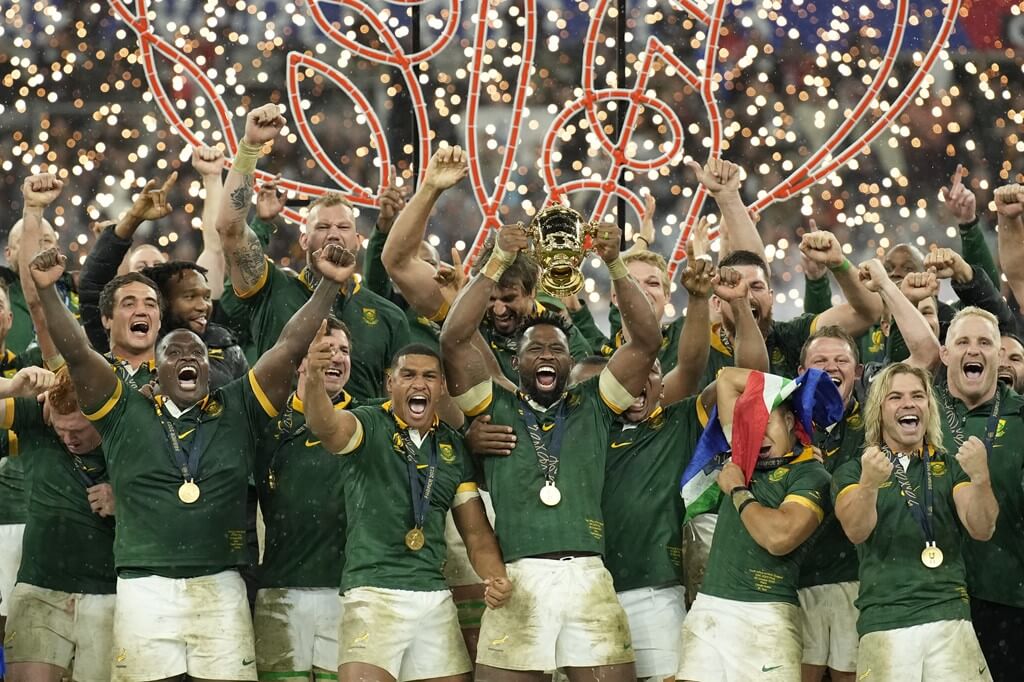
Erasmus later returned to the role of Springbok head coach for a second stint, continuing his influence over South African rugby’s structures and long-term strategy. His work contributed to South Africa’s triumph at the 2023 Rugby World Cup, reinforcing the team’s status as one of the dominant forces in international rugby.
Coaching Philosophy and Personality
Erasmus is known for his analytical approach to the game and his belief in long-term planning. He places strong emphasis on squad consistency, rhythm, momentum, and careful management of injuries. He also recognises that elite rugby often turns on fine margins, where discipline, luck, and decision-making can determine outcomes.
Beyond tactics, he is regarded as a direct communicator who is open with players and the media. His leadership style blends strategic thinking with emotional intelligence, allowing him to build strong player loyalty while maintaining a clear vision for the team.
Over the years, he has become one of the most influential figures in South African rugby history, shaping not only match strategies but also the structures behind the national game.