



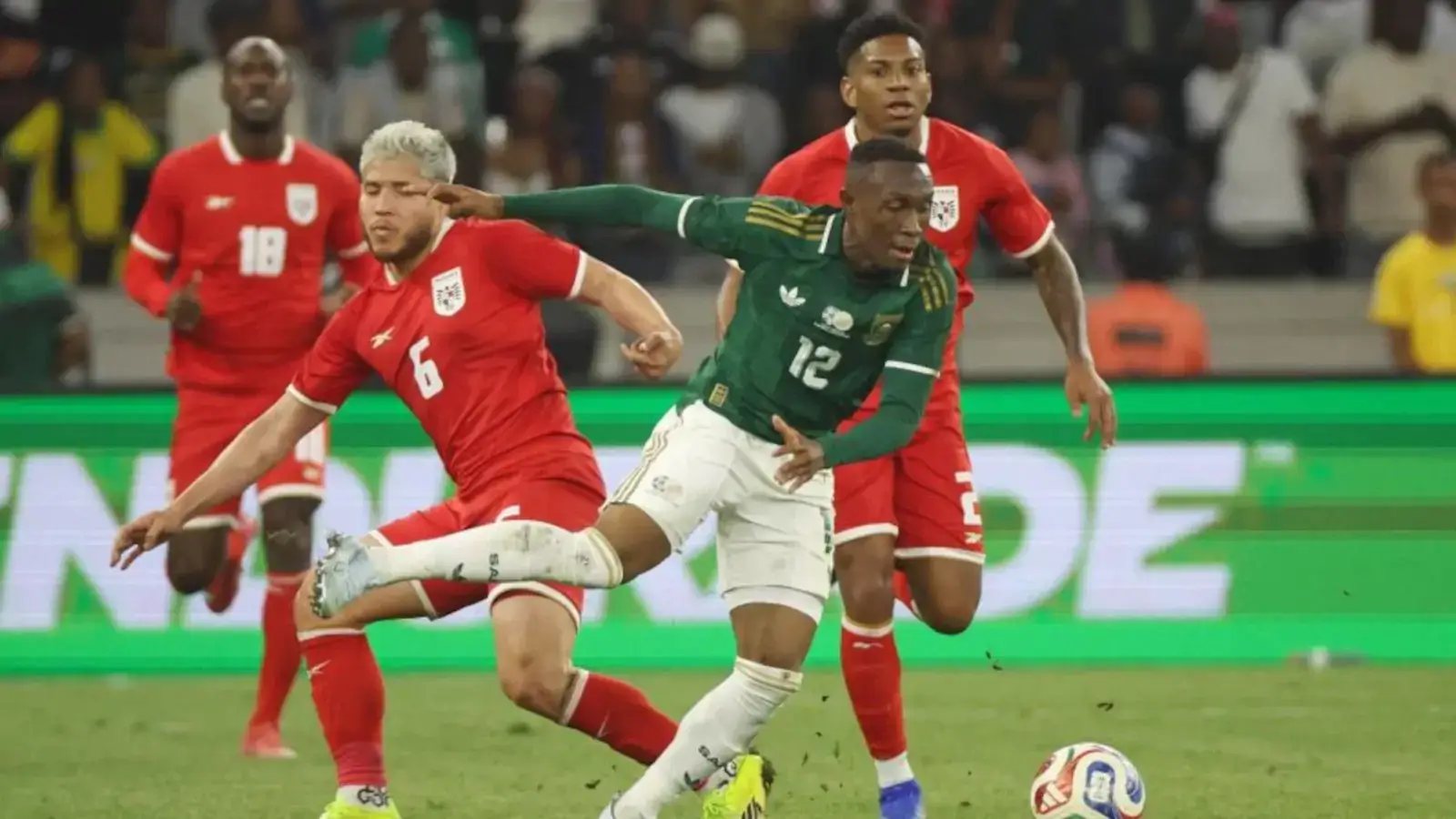
A friendly with real stakes
South Africa’s national team, Bafana Bafana, suffered a 2–1 defeat to Panama national football team on 31 March 2026 in a match that carried far more weight than a typical international friendly. With the 2026 FIFA World Cup on the horizon, this encounter offered head coach Hugo Broos another opportunity to assess his squad under pressure.
Played in front of an engaged home crowd, the match followed a 1–1 draw between the same teams just days earlier. That context added a competitive edge, turning what might have been a routine friendly into a revealing test of tactical discipline, mental resilience, and squad depth.
A slow start comes alive
The first half lacked rhythm, with both teams cautious in possession and limited in attacking penetration. South Africa looked organised defensively, but struggled to create clear chances in the final third. Panama, meanwhile, showed glimpses of their physicality and aerial threat but failed to convert early opportunities.
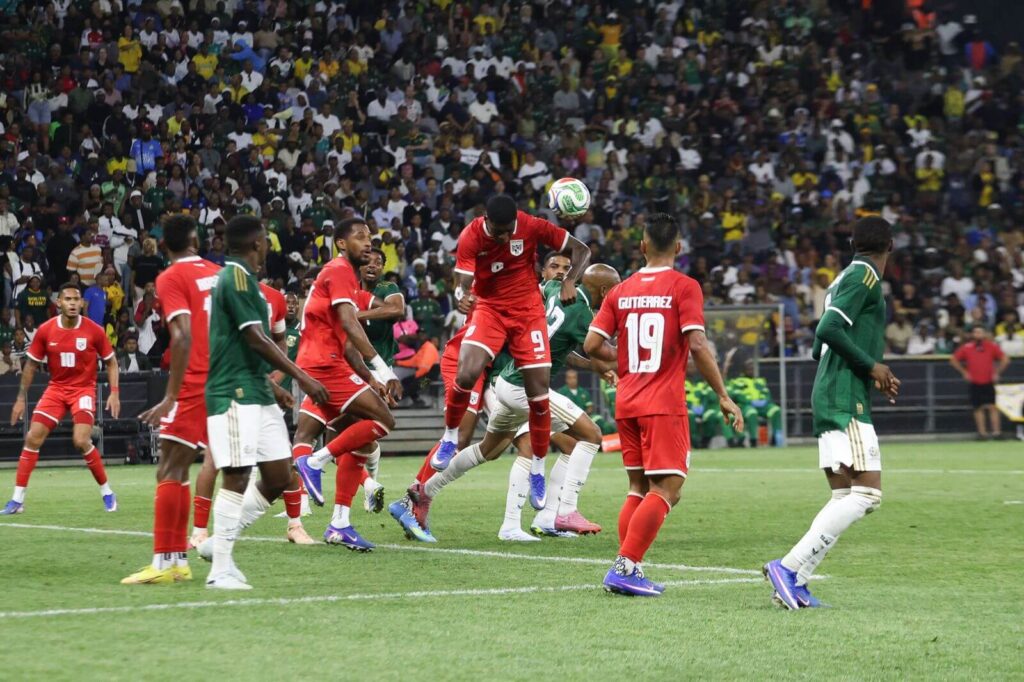
The game shifted dramatically after the break. Panama opened the scoring through José Córdoba, capitalising on a defensive lapse that exposed Bafana’s vulnerability in dealing with set pieces and second balls. It was a moment that underlined a recurring issue in South Africa’s recent performances.
Mbokazi moment sparks hope
South Africa’s response was immediate and impressive. Mbekezeli Mbokazi produced a stunning long range strike to level the match, injecting energy into both the team and the crowd. The goal was not only a showcase of individual brilliance but also a reminder of the attacking quality within the squad.
For a brief period, Bafana looked the more likely side to take control. Their tempo increased, midfield combinations improved, and there was a renewed sense of urgency in their play. However, that momentum proved difficult to sustain.
Defensive lapses prove costly
Despite their improved attacking intent, South Africa were undone once again by defensive shortcomings. Panama regained the lead through Jiovany Ramos, who found space in the box to convert from close range following another breakdown in defensive organisation.
The goal highlighted a key concern for Broos and his technical team. While Bafana have shown progress in structure and attacking patterns, their inability to consistently manage defensive situations remains a significant weakness. Against higher level opposition at the World Cup, such lapses could prove even more damaging.
Lessons ahead of the World Cup
This defeat marked a notable moment in Broos’ tenure, as it represented his first home loss since taking charge of the national side. While results in friendly matches are not always the primary focus, performances and patterns of play carry important implications.
South Africa’s attacking unit showed flashes of promise, but the supply to forwards such as Lyle Foster was inconsistent. Midfield transitions were at times too slow, allowing Panama to reset defensively and limit clear scoring opportunities.
At the same time, Panama’s efficiency served as a useful benchmark. They were clinical when chances arose and maintained defensive discipline throughout the match, illustrating the level of execution required at international tournaments.
A timely reality check
For Bafana Bafana, this result should be viewed less as a setback and more as a timely reality check. With the World Cup approaching, there is still an opportunity to address the gaps exposed in this match. Defensive organisation, particularly in set piece situations, will need urgent attention.
The positives remain. The squad continues to develop under Broos, and individual performances such as Mbokazi’s goal offer encouragement. However, consistency across ninety minutes remains the challenge.
In international football, especially at World Cup level, moments decide matches. Against Panama, South Africa showed they can create those moments. The next step is ensuring they can control them.