



The Rise of a Street Football Talent
Before he became one of South Africa’s most recognisable football exports, Sibusiso Zuma was a gifted youngster playing football on the streets of KwaMashu in Durban. Like many South African footballers of his generation, Zuma developed his style in informal matches where creativity, close control and instinct mattered more than structure.
His professional breakthrough came with African Wanderers before he joined Orlando Pirates in the late 1990s. At Pirates, Zuma quickly established himself as one of the most exciting attacking players in the country. He combined pace with technical ability and had a willingness to attempt the spectacular in big moments.
Supporters were drawn to his confidence. Defenders feared his unpredictability. Zuma played with freedom and personality at a time when South African football was producing a generation of highly gifted attackers.
Becoming a European Success Story
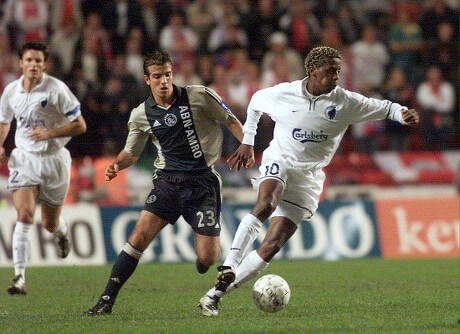
Zuma’s performances in the Premier Soccer League attracted attention from Europe, and in 2000 he completed a move to FC Copenhagen in Denmark.
The transfer proved to be a turning point in his career. South African players were increasingly moving abroad, but Zuma became one of the few to genuinely thrive in European football during that era.
In Denmark, he became a fan favourite almost immediately. His flair and attacking instincts made him stand out in the Danish Superliga, and he played a major role in FC Copenhagen’s domestic success. Zuma helped the club win league titles and establish itself as one of the strongest sides in Scandinavian football.
One of the defining moments of his career came in 2001 when he scored an unforgettable bicycle kick against Brondby in the Copenhagen derby. The goal remains one of the most famous in Danish football history and elevated Zuma into cult hero status among FC Copenhagen supporters.
The strike was more than just a spectacular finish. It symbolised the daring style that defined his game throughout his career.
Bafana Bafana’s Dynamic Attacker
At international level, Zuma became an important player for South Africa national football team during the early 2000s.
He represented South Africa at the 2002 FIFA World Cup in South Korea and Japan and featured in multiple Africa Cup of Nations tournaments. During a transitional period for Bafana Bafana after the country’s golden generation of the late 1990s, Zuma brought energy and attacking quality to the national side.
He formed part of a talented attacking era that included players capable of competing at the highest level abroad. Zuma’s European experience added maturity and tactical awareness to the national setup, while his willingness to take risks continued to make him a dangerous attacking weapon.
Although South Africa struggled for consistency internationally during parts of his national team career, Zuma remained one of the side’s most recognisable attacking figures.
Germany and the Physical Challenge
After his success in Denmark, Zuma earned a move to Arminia Bielefeld in the Bundesliga.
German football presented a different challenge. The pace and physical demands of the Bundesliga tested Zuma in new ways, but he still produced moments of quality and adaptability. Injuries disrupted parts of his time in Germany, yet he remained respected for his technical skill and professionalism.
Playing in both Denmark and Germany helped cement his reputation as one of South Africa’s most successful football exports of his generation. Few South African forwards of the era managed to sustain careers across multiple European leagues with the same level of visibility.
A Career Remembered for Flair and Courage
What separated Zuma from many forwards was not simply goals or statistics. It was the style in which he played the game.
He represented a fearless football culture built on creativity and expression. Whether taking on defenders, attempting difficult finishes or playing in high pressure matches abroad, Zuma embraced responsibility instead of hiding from it.
His bicycle kick for FC Copenhagen continues to be replayed years later because it captured the essence of his personality as a footballer. It was bold, unexpected and technically brilliant.
Even after retirement, Zuma remains respected within South African football circles as a player who proved that local talent could succeed on European stages without losing its identity or flair.
For younger South African footballers dreaming of careers abroad, Zuma’s journey still serves as an example of what confidence, talent and adaptability can achieve.