



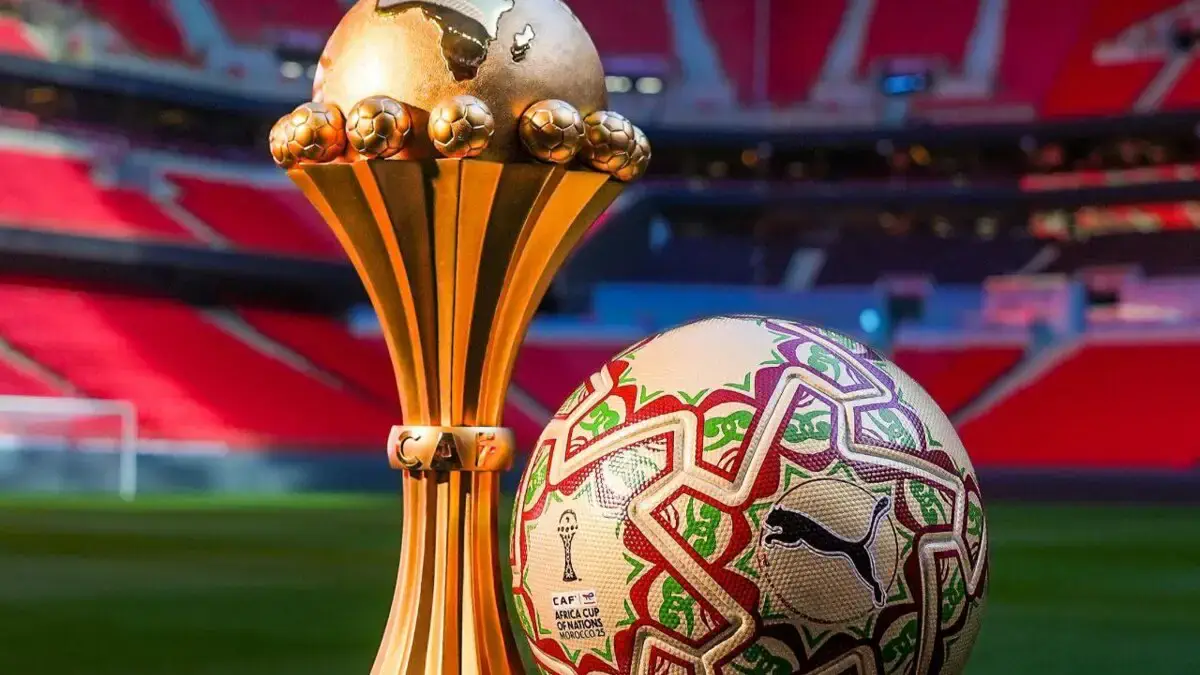
South Africa has its sights set on hosting another major football tournament. Sports Minister Gayton McKenzie has confirmed that the country is actively working on a 2028 Africa Cup of Nations bid – and it’s not going alone. Zimbabwe, Namibia, Botswana, Lesotho, and Mozambique are all part of a bold, ambitious joint southern African bid for the continent’s premier international football competition.
If successful, a South Africa AFCON 2028 bid would bring the Africa Cup of Nations to a region that has never hosted the tournament in the modern era. The implications for football, infrastructure, tourism, and southern African unity would be significant.
Why a Multi-Nation AFCON Bid Makes Sense
The multi-nation model has gained traction in global football hosting over the past decade. The 2026 FIFA World Cup itself is being hosted jointly by the United States, Mexico, and Canada. AFCON has evolved similarly, with larger, more distributed host arrangements becoming more feasible as African football infrastructure improves.
For southern Africa, a joint bid has several strategic advantages:
Key Benefits of the Joint Bid Structure
- Distributes the cost and infrastructure burden across six nations rather than one
- Demonstrates continental solidarity at a time when African football is pushing for greater global influence
- Creates a wider tourism footprint – international visitors and teams travel across multiple countries
- Leverages existing infrastructure – South Africa’s world-class stadiums anchor the bid while newer facilities in partner nations provide opportunity for development
- Stronger geopolitical case – a six-nation bid signals broad commitment to the tournament
South Africa’s Hosting Credentials
South Africa’s credentials as a major sporting host need no lengthy introduction. The 2010 FIFA World Cup remains one of the most celebrated football events in the sport’s history. The country’s stadium infrastructure – including Soccer City (now FNB Stadium), Moses Mabhida, Peter Mokaba, and others – meets world-class standards.
The AFCON tournament, typically featuring 24 nations, requires multiple venues, training facilities, accommodation, and broadcast infrastructure. South Africa can anchor those requirements, while the partner nations offer the distributed footprint that a regional bid requires.
South Africa’s Hosting Infrastructure
- Multiple FIFA-compliant stadiums from the 2010 World Cup legacy
- Established international airport connections across major cities
- Tourism infrastructure capable of handling large visitor volumes
- Broadcast and media facilities with international experience
The Bid Partners: A Southern African Alliance
Let’s look at what the other five nations bring to the South Africa AFCON 2028 bid:
Zimbabwe – Strong football culture and a growing stadium development programme
Namibia – Compact, manageable hosting environment with genuine football passion
Botswana – Politically stable, well-governed partner with growing football infrastructure
Lesotho – A smaller but significant voice in the region’s football development story
Mozambique – A coastal nation with a passionate football fanbase and investment in sports facilities
Together, they represent a southern African football bloc that AFCON has not significantly engaged as a hosting region before. That novelty, combined with genuine capability, makes the bid compelling.
What Success Would Mean for Bafana Bafana
Beyond the hosting infrastructure, there’s a football-on-the-pitch dimension to this story. If South Africa co-hosts AFCON 2028, Bafana Bafana would compete as a host nation – which typically provides automatic qualification.
After the excitement of the 2026 FIFA World Cup participation, hosting and competing in AFCON 2028 would provide South African football with continued momentum and purpose. The Bafana squad would be playing on home soil in front of their own fans – the kind of tournament context that drives performance and national pride.
Timeline and Next Steps
A successful bid for AFCON 2028 requires formal submission to the Confederation of African Football (CAF), inspection visits, and ultimately a vote by CAF’s executive committee. McKenzie’s announcement indicates the process is underway – but the formal bid documentation and CAF proceedings will determine the outcome.
South African football will be watching developments closely. The bid is ambitious. But given what South Africa achieved in 2010, ambitious is exactly the right posture.
FAQ: South Africa AFCON 2028 Bid
Which countries are involved in the South Africa AFCON 2028 bid?
The joint bid involves South Africa, Zimbabwe, Namibia, Botswana, Lesotho, and Mozambique.
Who announced South Africa’s involvement in the AFCON 2028 bid?
Sports Minister Gayton McKenzie confirmed South Africa’s participation in the multi-nation bid.
When would the Africa Cup of Nations 2028 take place?
The 2028 Africa Cup of Nations would take place in 2028, two years after the 2026 edition.
Has South Africa hosted AFCON before?
South Africa hosted the Africa Cup of Nations in 1996, with Bafana Bafana winning the tournament on home soil – one of the proudest moments in South African football history.
Who governs the Africa Cup of Nations?
The Africa Cup of Nations is organised by the Confederation of African Football (CAF).