




The Heartbeat of Soweto Football and a Pillar of South African Sport
Team Overview
Orlando Pirates are not simply a football club; they are a living piece of South African sporting history. Based in Soweto, Johannesburg, the Buccaneers have spent nearly a century shaping the identity of the local game, carrying the hopes of generations who see the famous black-and-white jersey as a symbol of pride and belonging. Few teams in the country command the same emotional pull or cultural significance every time they take the field.
In the broader context of South African sport, Pirates exist as more than competitors chasing trophies. They are a cultural institution woven into daily life in townships and cities alike. From dusty community pitches to continental showpieces, the club’s story mirrors the journey of South African football itself. Whether lifting silverware or rebuilding for the future, Orlando Pirates are never far from the national conversation. They represent resilience, tradition and the enduring heartbeat of Soweto.
Identity and Roots
Officially known as Orlando Pirates Football Club, the team carries nicknames that speak to both its style and spirit: The Buccaneers and Ezimnyama Ngenkani, loosely meaning “the mighty black ones.” Founded in 1937, the club’s black and white colours have become instantly recognisable across the country.
Their home remains Soweto, a place synonymous with history, struggle and sporting excellence. The club’s identity is inseparable from this environment. Pirates are not a corporate invention or a recent project; they were born from community football and shaped by ordinary people with extraordinary passion for the game.
Home Ground: Orlando Stadium
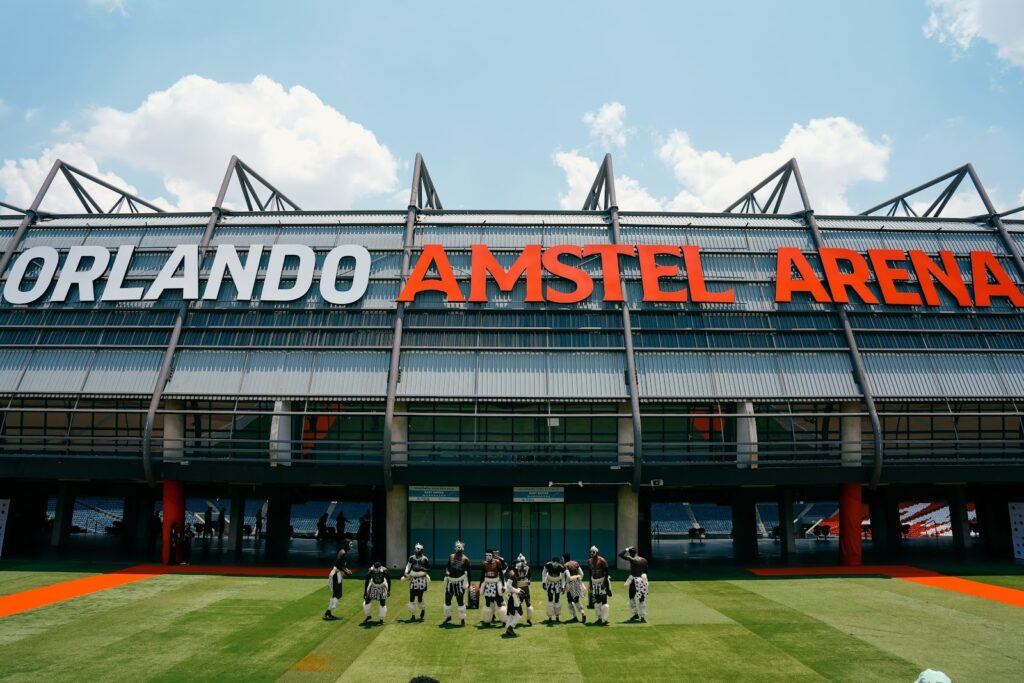
Orlando Pirates play their home matches at Orlando Stadium, a venue that holds around 40,000 supporters and sits in the heart of Orlando East. More than just a football ground, it is one of the spiritual homes of the South African game.
On matchdays, the stadium transforms into a sea of black and white. Drums echo through the stands, songs ripple from one corner to another and the energy rarely dips for ninety minutes. Evening fixtures under the lights add an edge that makes the atmosphere even more intense. Visiting teams often describe the ground as intimidating, not because of its size alone, but because the crowd feels close, loud and relentlessly invested. For Pirates fans, this is sacred space. It is where memories are made and legends are born.
History and Background
The story of Orlando Pirates began in 1937 when a group of young footballers formed a team in Orlando, Soweto. Long before professional structures were established, the club was already building a name for itself in local township leagues. Those early years laid the foundation for a fan base built on loyalty and shared identity.
During the apartheid era, Pirates played a central role in black football competitions and became symbols of pride in communities often excluded from mainstream sporting structures. By the 1970s and 1980s, they were widely regarded as one of the giants of the local game.
The dawn of the modern professional era brought global attention. In 1995, Pirates made history by becoming the first South African club to win the CAF Champions League. That continental triumph, achieved soon after the country’s readmission to international sport, remains one of the defining achievements in South African club football. Since then, different decades have brought cycles of dominance, rebuilding and renewal, but the club’s stature has never faded.
Honours and Achievements
Success has followed Orlando Pirates across generations. They have claimed multiple domestic league titles in both the old National Soccer League and the modern Premier Soccer League era. Cup competitions have also been kind to the Buccaneers, with numerous Nedbank Cup, MTN8 and Telkom Knockout triumphs reinforcing their reputation as a team built for big occasions.
On the continental stage, their 1995 CAF Champions League victory stands as a landmark moment. Regular appearances in African competitions have kept Pirates among the most recognised South African names beyond the country’s borders. Few clubs can match their combination of longevity and silverware.
Playing Style and Philosophy
Traditionally, Pirates football blends discipline with flair. The team is known for structured defensive organisation, quick transitions and intelligent use of width. Full-backs overlap with purpose, midfielders control tempo and attackers look to exploit space rather than force chaos.
There is an expectation of effort that runs deep within the club’s culture. Fans demand intensity and commitment before anything else. While creativity is celebrated, work rate is non-negotiable. The result is a style that feels both modern and rooted in township football traditions: organised, purposeful and capable of sudden moments of brilliance.
Players Who Shaped the Badge
Over the years, Orlando Pirates have produced and attracted players who left lasting marks on the game. Legends like Jomo Sono, affectionately known as the “Black Prince,” helped define the club’s identity and inspired future generations. Leaders such as Edward Motale and Helman Mkhalele became symbols of consistency and excellence during key periods.
In more recent times, figures like Benedict Vilakazi, Happy Jele and Thembinkosi Lorch carried the team through important campaigns with creativity and leadership. Today, emerging talents such as Relebohile Mofokeng and other young prospects signal a future built on internal development, ensuring that the Pirates story continues to evolve.
Rivalries That Define Seasons
No discussion of Orlando Pirates is complete without mentioning their rivalries. The Soweto Derby against Kaizer Chiefs is widely regarded as the biggest fixture in South African football. It is more than a match; it is a social event that divides families, workplaces and entire neighbourhoods for ninety minutes. Form and league position often mean little when pride is on the line.
Clashes with Mamelodi Sundowns provide a different type of tension. These encounters are often tactical, calculated battles between title contenders and frequently influence the championship race. Together, these rivalries ensure that Pirates are constantly tested at the highest level.

Development and the Future
In recent years, the club has increased its focus on youth structures and long-term sustainability. Academy systems and reserve teams feed directly into the senior squad, giving young players genuine opportunities to grow. This pathway not only strengthens the team but also reinforces the belief that local talent from Soweto and beyond can power the club’s next generation.
Development has become more than a strategy; it is a philosophy aimed at preserving the club’s identity while adapting to modern football demands.
Supporters and Cultural Impact
Perhaps the most powerful force behind Orlando Pirates is their support. Generations of fans attend matches together, passing down songs, traditions and stories. From taxis to taverns, the badge travels with the people. Win or lose, the loyalty rarely fades.
This connection is why the club matters so deeply. Orlando Pirates embody township heritage, continental ambition and the shared memories of countless supporters. They are not just participants in South African football history; they are architects of it.
Closing Thoughts
From humble beginnings in 1937 to continental glory and modern PSL battles, Orlando Pirates remain one of the true pillars of the game. Historic, competitive and deeply rooted in their community, the Buccaneers continue to carry Soweto’s spirit onto every pitch they step on. Black and white is more than a colour scheme. It is an identity forged over decades, and as long as football thrives in South Africa, Orlando Pirates will always matter.