



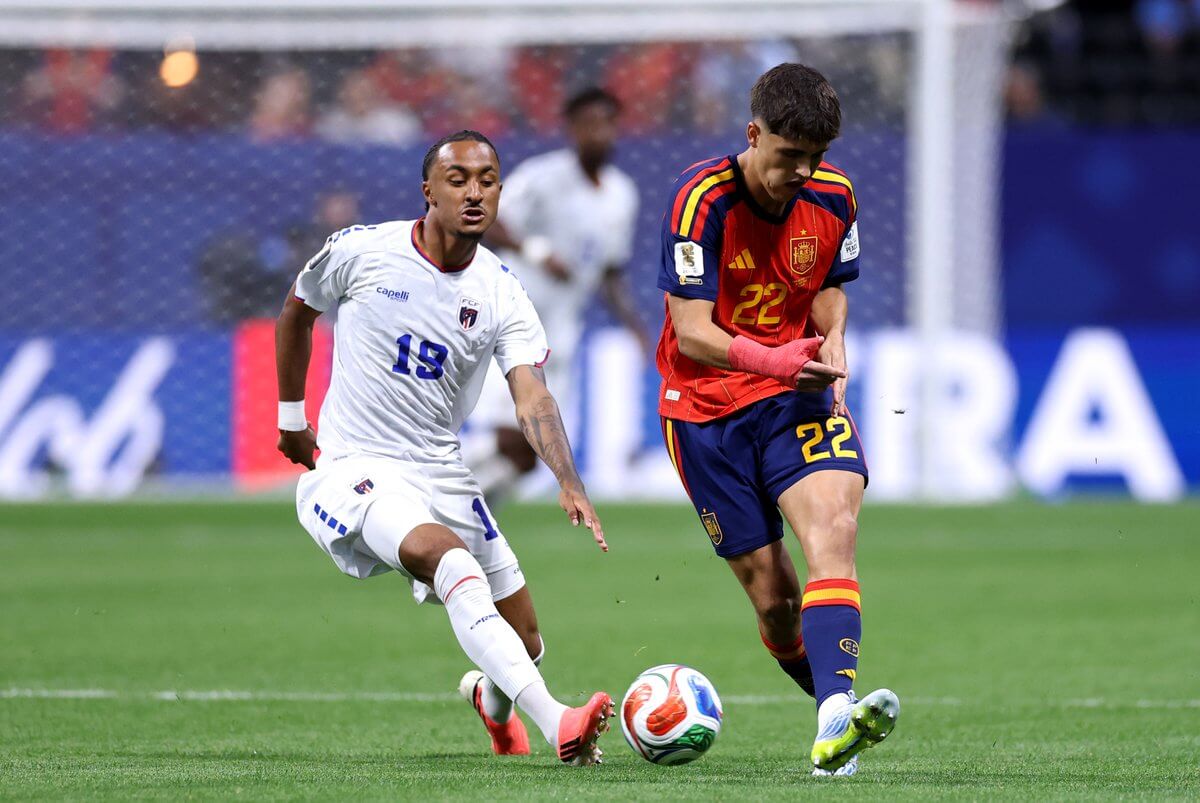
Let us start with the odds. Before a ball was kicked in Group H of the 2026 FIFA World Cup, the bookmakers had Spain as one of the tournament favourites. World’s top-ranked team. European Championship holders. Lamine Yamal and Pedri and a squad so deep that they could field two entirely different starting elevens and both would comfortably beat most national teams on the planet.
Cape Verde. A small archipelago nation of 500,000 people off the west coast of Africa. Making just their second appearance at a FIFA World Cup. Given approximately a 2% chance of taking anything from this fixture.
Final score: Spain 0, Cape Verde 0.
They said it was the biggest lost bet in 2026 World Cup history so far, and I do not doubt it for one second. Somewhere in the world, a very expensive accumulator died the moment that final whistle blew.
Who Are Cape Verde?
Before we analyse what happened, let us take a moment to appreciate who Cape Verde actually are, because this result deserves proper context.
The Blue Sharks, as they are known, qualified for only their second FIFA World Cup at this tournament. Their squad is built almost entirely from players plying their trade in the Portuguese Primeira Liga and across the lower leagues of Europe. No superstars. No household names. A squad held together by national pride, tactical discipline, and the kind of collective belief that only comes when a group of players know that the football world expects nothing from them.
That expectation of nothing is, paradoxically, one of the most powerful advantages a team can have at a World Cup.
Cape Verde’s coach prepared his side for exactly what Spain would bring. High press. Fast transitions. The short passing game that has defined Spanish football since the era of Guardiola and Xavi. And Cape Verde’s answer was to make themselves the most compact, most disciplined, most frustrating team Spain had faced in memory.
What Actually Happened on the Pitch
Spain dominated possession. Of course they did. You do not stop Spain from having the ball. You stop them from doing anything useful with it.
Cape Verde set up in two disciplined banks of four, conceded the wide areas, and packed the central corridors where Spain’s attacking combinations are most dangerous. Every time Yamal or Nico Williams tried to cut inside onto their stronger foot, there was a Cape Verde player in the way. Every time the Spanish attacking midfield tried to find a pocket of space between the lines, the Blue Sharks’ shape swallowed it up.
Spain had shot after shot. They had corners. They had Pedri threading passes into areas that should have produced goals. But the keeper was outstanding, the defensive organisation was extraordinary, and Spain’s sharpness in the final third, on this one night, was simply not good enough to break the lock.
Full time: 0-0. Cape Verde goalkeeper gets carried off the pitch by his teammates. Entire nation presumably does not sleep.
The Betting Carnage
Reports emerged after the final whistle that this was responsible for the biggest single losing bet in 2026 World Cup history. We will not speculate on the exact figure, but the combination of Spain being so heavily fancied, the low price available on any kind of positive Spain result, and the number of accumulators worldwide that had Spain as a banker selection produced what can only be described as a collective financial catastrophe for a large portion of the football betting public.
For Cape Verde fans, this is entirely someone else’s problem. Their team just held the number one ranked team in the world to a goalless draw at a FIFA World Cup.
What It Means for Group H
Spain are not eliminated. Not even close. They have two more group games to put this right, and against Uruguay and Saudi Arabia, they remain heavy favourites to advance. But the pressure on Luis de la Fuente’s side is real now. They cannot afford another slip.
And Cape Verde, on one point, are genuinely in the conversation for a historic place in the round of 32. They need to take something from their remaining games. Given what they showed against Spain, nobody should be counting them out.
The World Cup Needs Stories Like This
Cape Verde 0-0 Spain is precisely why the FIFA World Cup matters more than any other football competition on earth. No amount of club football, no Champions League final, no Premier League title race produces the specific electricity of a group of players from a tiny island nation walking onto the same pitch as the world’s best team and refusing, point-blank, to be beaten.
Japan shocked Germany in Qatar 2022. Senegal beat France. South Korea eliminated Germany in 2018. Saudi Arabia beat Argentina.
Now Cape Verde and Spain. The list grows.
The 48-team format has been criticised in some quarters for diluting the quality of the group stage. Cape Verde versus Spain on Monday night is the answer to every single one of those criticisms.
More nations. More stories. More of this.
FAQ: Spain vs Cape Verde World Cup 2026
What was the result of Spain vs Cape Verde at the 2026 World Cup?
Spain were held to a 0-0 draw by Cape Verde in their opening Group H fixture at the 2026 FIFA World Cup, in what has been described as the biggest shock of the tournament so far.
What group are Spain and Cape Verde in at the 2026 World Cup?
Spain and Cape Verde are in Group H, alongside Uruguay and Saudi Arabia.
Is this Cape Verde’s first World Cup?
No. The 2026 FIFA World Cup is Cape Verde’s second tournament appearance. Their debut came at a previous World Cup.
Can Spain still qualify for the round of 32?
Absolutely. Despite the draw with Cape Verde, Spain have two more group games and remain strong favourites to advance from Group H.
Why is this result considered such a major upset?
Spain were ranked first in the world by FIFA and entered the tournament as one of the top contenders to win it. Cape Verde are a small island nation of around 500,000 people competing in just their second World Cup.
Internal Links:
- Africa at the World Cup 2026
- World Cup 2026 Biggest Storylines
- FIFA World Cup 2026 Hub
- World Cup 2026 Group Stage Results
- World Cup 2026 Golden Boot Race
External Links: