



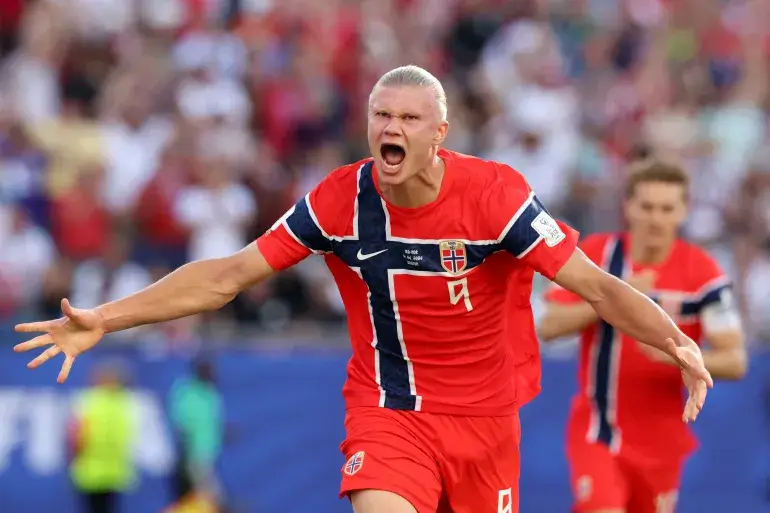
Before the 2026 FIFA World Cup kicked off, there were doubters. Not about the football itself, but about the format. Forty-eight teams, they said, is too many. The group stage will be full of mismatches. You will get 6-0 walkovers and 1-0 snoozefests and long lists of forgettable results from nations who had no business being at a World Cup.
Eight days in, the doubters have gone very quiet.
Eighty-eight goals in twenty-seven matches. That is more than three goals per game, a rate that would comfortably make this the highest-scoring World Cup in modern history if it keeps up. We have had a six-goal comeback. We have had a come-from-behind classic between two European giants. We have had the world’s top-ranked team held to a goalless draw by a tiny island nation. We have had hat-tricks from three different players. And we are not even through the group stage.
This World Cup is not just delivering. It is overdelivering. And here is exactly why.
The Numbers Are Genuinely Staggering
Let us put 88 goals in 27 games in context. The 2018 World Cup in Russia produced 169 goals in 64 games: 2.64 per match. The 2022 World Cup in Qatar produced 172 goals in 64 games: 2.69 per match. Both were considered entertaining tournaments.
The 2026 World Cup is currently running at over 3.25 goals per game.
If that rate continues across all 104 matches, the tournament will produce in excess of 340 goals. That would be the highest total in World Cup history, by a considerable margin. There would be more goals scored at this single tournament than at the 2014 and 2018 editions combined.
The ball is going in the net. A lot. And football fans worldwide are absolutely here for it.
Why Is This World Cup So High-Scoring?
Several factors have combined to produce this extraordinary goalscoring environment.
The golden generation of strikers. This may be the most talented collection of centre-forwards that the World Cup has ever assembled. Messi. Mbappe. Haaland. Kane. David. Alvarez. Gyokeres. Isak. These are not fringe talents at a late stage of their careers; they are the best strikers in the world, at or near the peaks of their powers, and they are all here, at the same tournament, at the same time. When this much quality is pointing at goal, goals follow.
The expanded format incentivising attack. In the old 32-team format with 16 group games of three matches each, some teams could afford to be conservative in their opening fixtures. The draw was an acceptable result when points were at a premium. In the expanded format, with 48 teams and the top two plus eight third-placed teams advancing, more teams are taking risks. More teams are playing for wins from minute one. More open games means more goals.
The pitches, the altitude, and the venues. Several of the American stadiums are in conditions that historically produce high-scoring games. The fast, true playing surfaces, the altitude at certain venues, and the sheer size of the facilities all play a role in the kind of football being played.
Teams coming to play. Perhaps most simply: the nations at this World Cup, many of them appearing for only the second or third time, are not here to protect a result. They are here to express themselves. And expressed football tends to produce goals.
The Games We Will Never Forget
We are not yet halfway through the group stage, and already this tournament has delivered moments that will be talked about for years.
Messi’s hat-trick against Algeria was a reminder that the sport’s greatest ever player has one final act left to give. Three goals. The all-time record equalled. The stadium on its feet for a full minute after the final whistle.
Canada 6-0 Qatar was something North American football will show to its children. Six goals. Hats in the air. A nation discovering that its team does not just belong here; it might actually be able to compete.
Netherlands 2-2 Japan was possibly the best match of the tournament so far. Japan twice came from behind against one of Europe’s great footballing nations, producing football so good and so committed that by the final whistle even the Dutch supporters were applauding.
Sweden 5-1 Tunisia showed that this is a tournament with genuine scale and attacking depth beyond the superstars.
Cape Verde 0-0 Spain showed that the tournament giveth drama in every direction, including the kind where nobody scores and everybody goes absolutely berserk anyway.
The Format Has Been Vindicated
The critics of the 48-team expansion said the quality would suffer. Eight days in, the quality has not suffered. What has changed is the breadth of stories and the variety of narratives the tournament is producing simultaneously.
Cape Verde is a story. Canada is a story. Norway’s Haaland is a story. Messi’s record is a story. The goalfest numbers are a story. None of these existed before the expanded format, because in the old World Cup, at least two of these nations would not have been here.
More teams. More stories. More goals. More World Cup.
The 2026 FIFA World Cup is not just the biggest sporting event in human history by the numbers. It is threatening to be the best one too.
What to Watch for in the Rest of the Group Stage
If the first eight days have felt extraordinary, the second and third rounds of group matches are where things get genuinely dramatic. Results start to matter in ways they did not in the first game. Teams chasing a result play more open football. Teams protecting a lead invite pressure. The goalscoring environment, if anything, should get richer.
Keep your eye on the following as the group stage reaches its climax:
- Can Haaland add to his tally when Norway face tougher opposition?
- Will Mbappe continue his goalscoring run and take France deep into the tournament?
- How many more teams will pull off Cape Verde-style shocks against more fancied opponents?
- And most importantly for South Africa: can Bafana add to their goal tally against South Korea on June 25?
This tournament is extraordinary. And we have barely started.
FAQ: World Cup 2026 Goals
How many goals have been scored at the 2026 World Cup?
As of matchday 19 June 2026, 88 goals have been scored in 27 group stage matches, averaging over three goals per game.
Is the 2026 World Cup the highest-scoring in history?
It is on course to be. If the current rate continues, the 2026 World Cup will produce more goals than any previous edition of the tournament.
Why is the 2026 World Cup so high-scoring?
A combination of elite strikers at their peak, an expanded format incentivising attacking play, fast playing surfaces, and nations choosing to express themselves rather than play conservatively has produced an extraordinary goalscoring environment.
How many matches are there in total at the 2026 World Cup?
The 2026 FIFA World Cup features 104 matches in total, up from 64 at previous tournaments, across 16 host cities in the United States, Mexico, and Canada.
Internal Links:
- Messi Hat-Trick and All-Time Record
- World Cup 2026 Golden Boot Race
- World Cup 2026 Biggest Storylines
- Cape Verde vs Spain Shock
- FIFA World Cup 2026 Hub
External Links: